
Halva Masterclass is live. Watch the first lesson for free!
More results...

| Eggplant: | 3 |
| Egg: | 3 |
| Onion: | 1 (large) |
| Flour: | 1 tbsp |
| turmeric: | 2 tsp |
Peel and roughly grate the eggplants. Then place in a bowl and soak in water and salt (about 50 g salt per liter of water). This helps to draw out the bitter substances from the eggplants and prevents them from soaking up too much oil when frying. Leave to soak for at least 30 minutes to completely remove the bitter substances.
Peel and chop the onions and fry in a pan with a little oil. As soon as the onions are translucent, add the turmeric and stir well. Turmeric is an important ingredient in Persian cuisine. It gives many Persian dishes a warm, golden color and softens the intense smell of ingredients such as meat and onions.
Looking for more recipes with this wonderful spice? Just enter ‘turmeric’ in our search bar above and discover more!Remove the eggplants from the salted water, drain well, and squeeze out the liquid vigorously with your hands. Add the eggplants to the onions in the pan and fry lightly. If the mixture becomes too dry, add a dash of water. Allow to infuse well so that the flavors combine optimally.
One key step: We need to let the cooked eggplants cool first so that the raw eggs don’t set immediately. Beat the eggs in a large bowl, add the turmeric and a pinch of pepper. Then stir in a tablespoon of flour so that the Kuku holds together nicely when frying. Add a pinch of pepper and mix the mixture thoroughly until it is uniform. Finally, add the cooled eggplants and mix thoroughly.
Tip: Make sure that the mixture does not become too liquid so that the Kuku remains stable when frying and does not fall apart. Unsure whether the eggplant mixture is just right? No problem! Watch our video tutorial to follow the perfect process step by step.Pour a little oil into a frying pan and spread the Kuku mixture evenly. Cook slowly over a low heat until the underside is golden brown. Carefully turn and fry the other side until the kuku is fully cooked. For an even roasting result, it is important to cook the kuku slowly over a low heat.
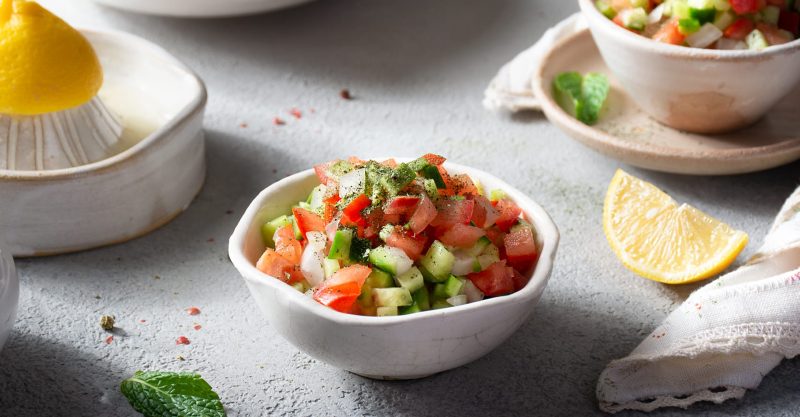
Cut the finished Kuku Bademjan into pieces and serve as a main course or side dish. It goes particularly well with fresh bread, herbs and a crisp salad such as the Shirazi salad.
| Eggplant: | 3 |
| Egg: | 3 |
| Onion: | 1 (large) |
| Flour: | 1 tbsp |
| turmeric: | 2 tsp |
Recommendations from Chef of Persia




Want to know where you can try this dish? We’ve done the research and found out which restaurants have this dish (or a variation of it) on their menu.
Mention Chef of Persia when ordering!
Kuku Bademjan (کوکو بادمجان) is a Persian egg-based dish with eggplant, traditionally prepared in the Fars province. It belongs to the family of Kuku dishes (کوکو) – savory egg dishes where various vegetables or herbs are mixed with eggs and cooked like an omelet or a firm pancake. Compared to other Kukus, Kuku Bademjan is particularly simple to prepare and uses just a few but flavorful ingredients. Spices like turmeric, pepper, and cinnamon give it its signature depth and warmth.
Eggplants are not only versatile but also rich in fiber, vitamins, and antioxidants. This makes Kuku Bademjan not only delicious but also a healthy choice – especially for those following a vegetarian diet or looking for a lighter meal.
Kuku Bademjan can be served in many ways. It can be cut into slices and served as a side dish – for example, with rice or grilled vegetables. As a main course, it is often paired with fresh flatbread like Taftoon or Lavash, along with fresh herbs, yogurt, or a Shirazi Salad.
When fried in a small round pan, it also works perfectly as a vegetarian patty for a sandwich or wrap. In many households, Kuku is cut into bite-sized pieces and enjoyed as a snack or picnic dish – perfect for sharing.
Yes, Kuku pairs very well with rice – especially when served as a main dish. In many Persian households, Kuku Bademjan or Kuku Sabzi is served with Persian rice such as Chelo or Kateh. The fluffy rice complements the savory, tender Kuku and makes it a filling, balanced meal. You can learn how to prepare Persian-style rice – including the crispy Tahdig – in our blog article.
Persian cuisine offers many regional Kuku variations:
Read more
Lorem ipsum dolor sit amet, consectetur adipiscing elit. Ut elit tellus, luctus nec ullamcorper mattis, pulvinar dapibus leo.